1470
The island is found
Portuguese navigators João de Santarém and Pêro Escobar reach São Tomé on 21 December 1470.
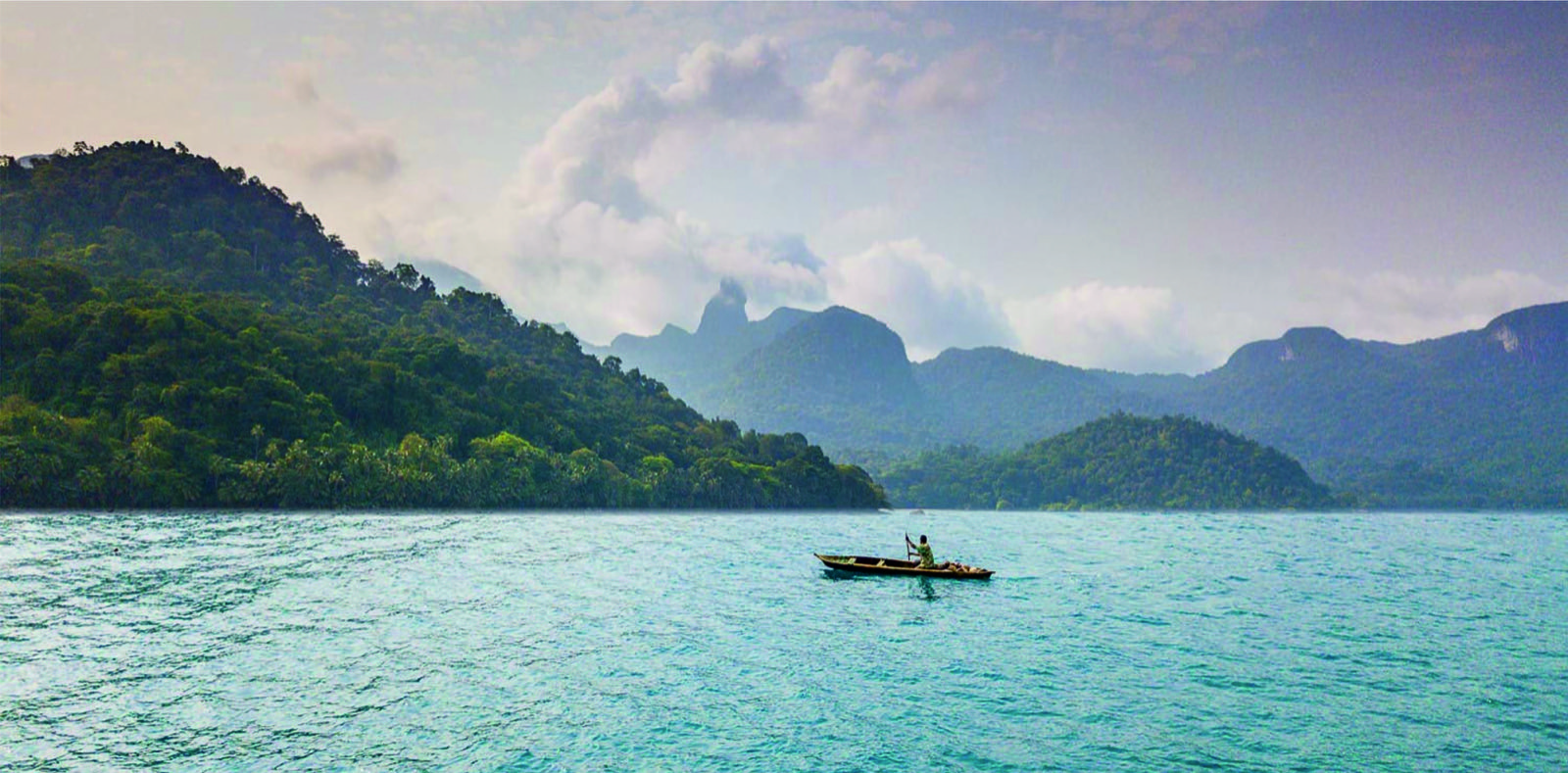
A historic sanctuary in the heart of the São Tomé forest.
1470
Portuguese navigators João de Santarém and Pêro Escobar reach São Tomé on 21 December 1470.
1519
Only 49 years later, charts already name a southern watercourse Rio de S. Michaelis — the Archangel on the map, long before a settlement.
1883
The Viscount of Malanza, Jacinto Carneiro de Sousa e Almeida, founds the roça. It can be reached only by sea from Porto Alegre. The chapel of stone and lime is raised in this remote plantation.
2020
Luciano Baetz, who has brought more than 500 travellers to the islands, begins a personal return to faith and to the old maps that speak of the Lands of Miguel.
2025
On 24 June, Luciano Baetz and Inês Barabola sail from Porto Alegre with the local sailor Giló Azancont. In the forest they find the chapel — and the original image of the Archangel, intact after 143 years.
For centuries the island was a staging post of the Atlantic slave trade. People taken from Guinea-Bissau to Angola passed through São Tomé before the crossing to Brazil and the Americas.
After cocoa and coffee declined, the roça was abandoned. Tropical forest closed over the stone buildings. The chapel kept its name on old charts — and its statue in the dark.
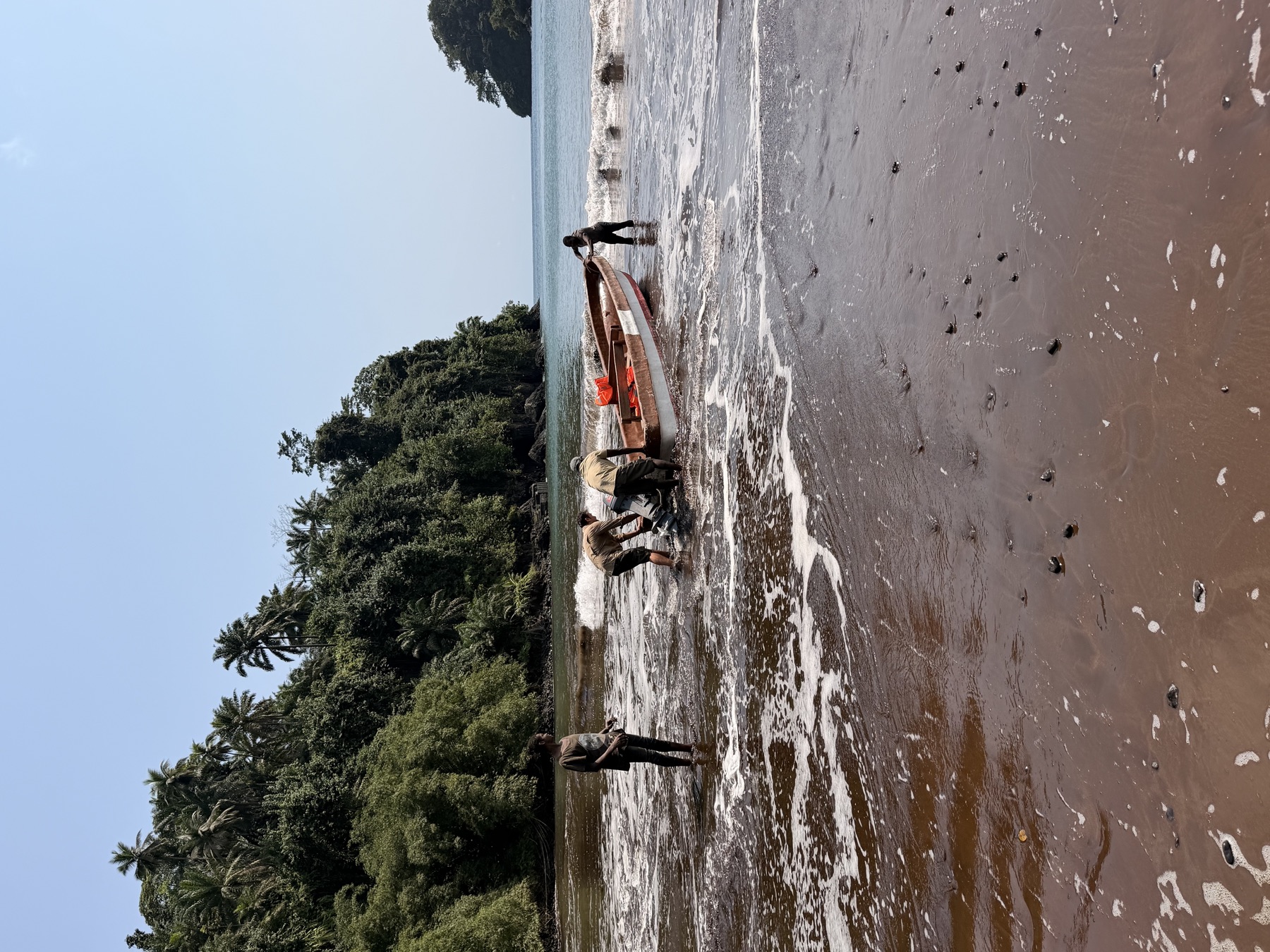
In life, coincidences do not exist—there are only callings.
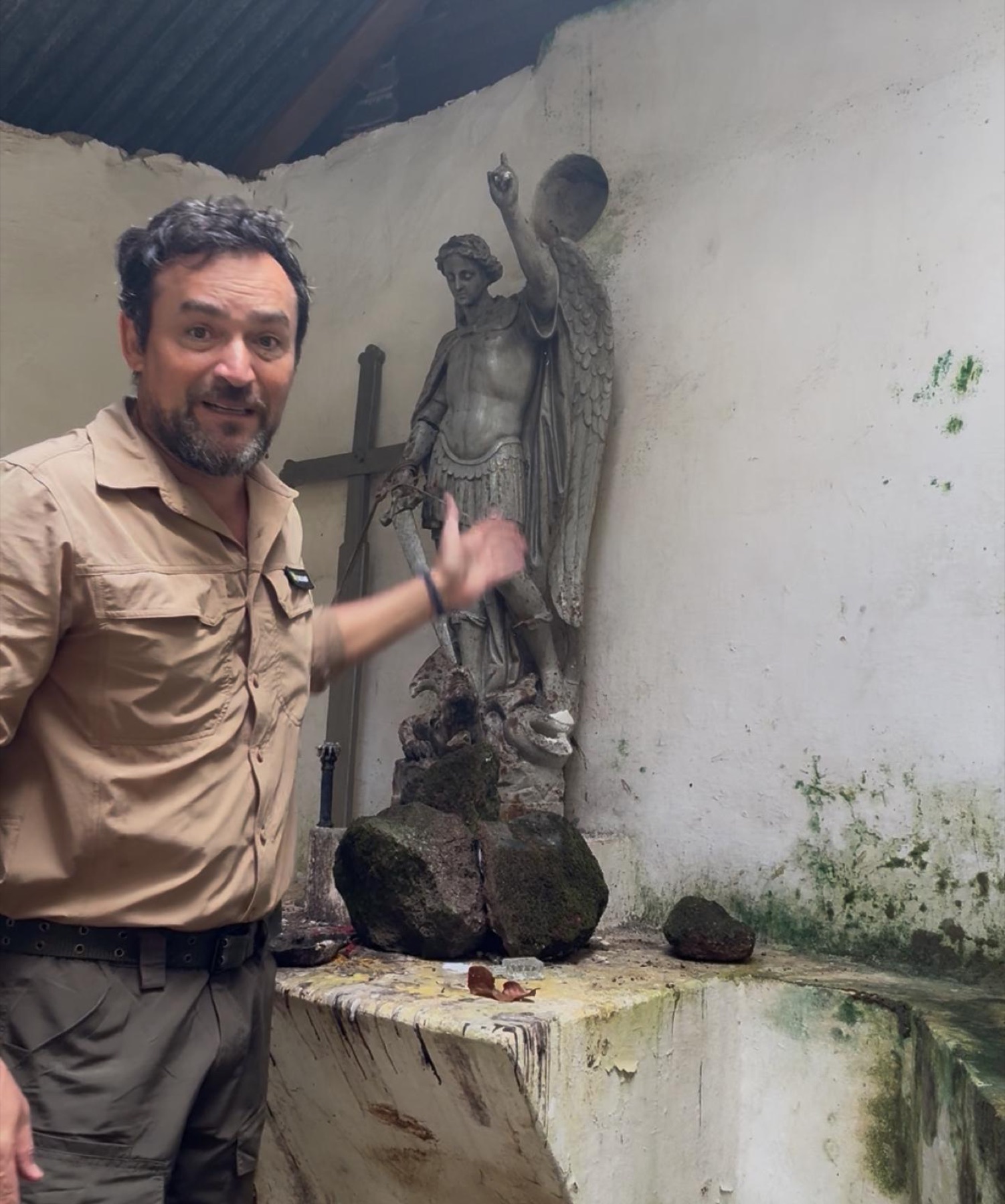
Inês Barabola had been leading CelebraRe gatherings at Pedra Bonita in Rio de Janeiro — a place of refuge for enslaved people. That memory, a chapel imagined under the same name, and the old roça in São Tomé brought the two of them to the island.
What they found was shown to Padre Wadileme Carlos and reached the Bishop of São Tomé and Príncipe, D. João de Ceita Nazaré. This site exists to put the chapel back on the map — and to raise the gifts that will rebuild it.
Join the chain of goodwill